Key takeaways
- Frameless doors use only hinges and a handle, with thick glass.
- Semi-frameless doors add a slim frame at the top or sides.
- Framed doors have metal around every panel and suit heavy use.
- The right choice depends on your walls, your tub or base and how you use the shower.
Frameless: the clean look
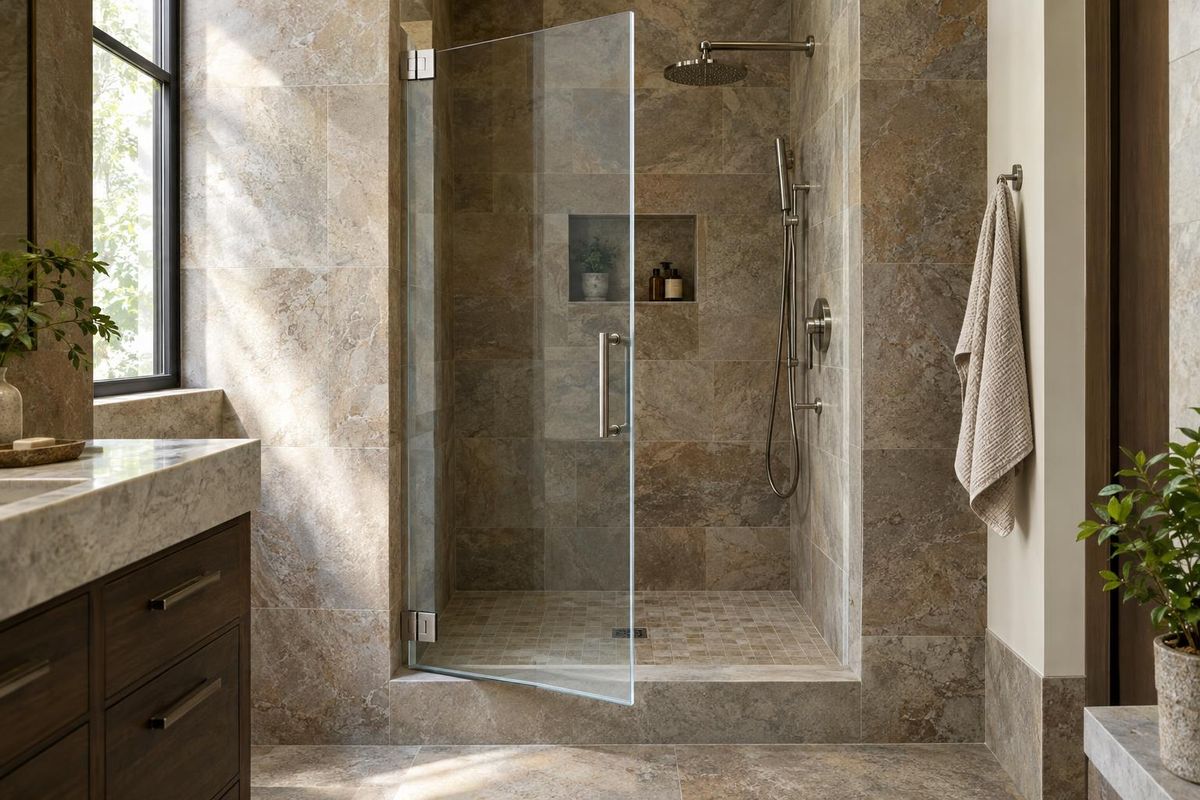
A frameless door is a sheet of thick tempered glass held by a few small hinges and a handle. With no frame to see or clean, the tile and the glass do the talking.
Because there is no frame to hide a poor fit, the glass must be measured and installed precisely.
Semi-frameless: a bit of support
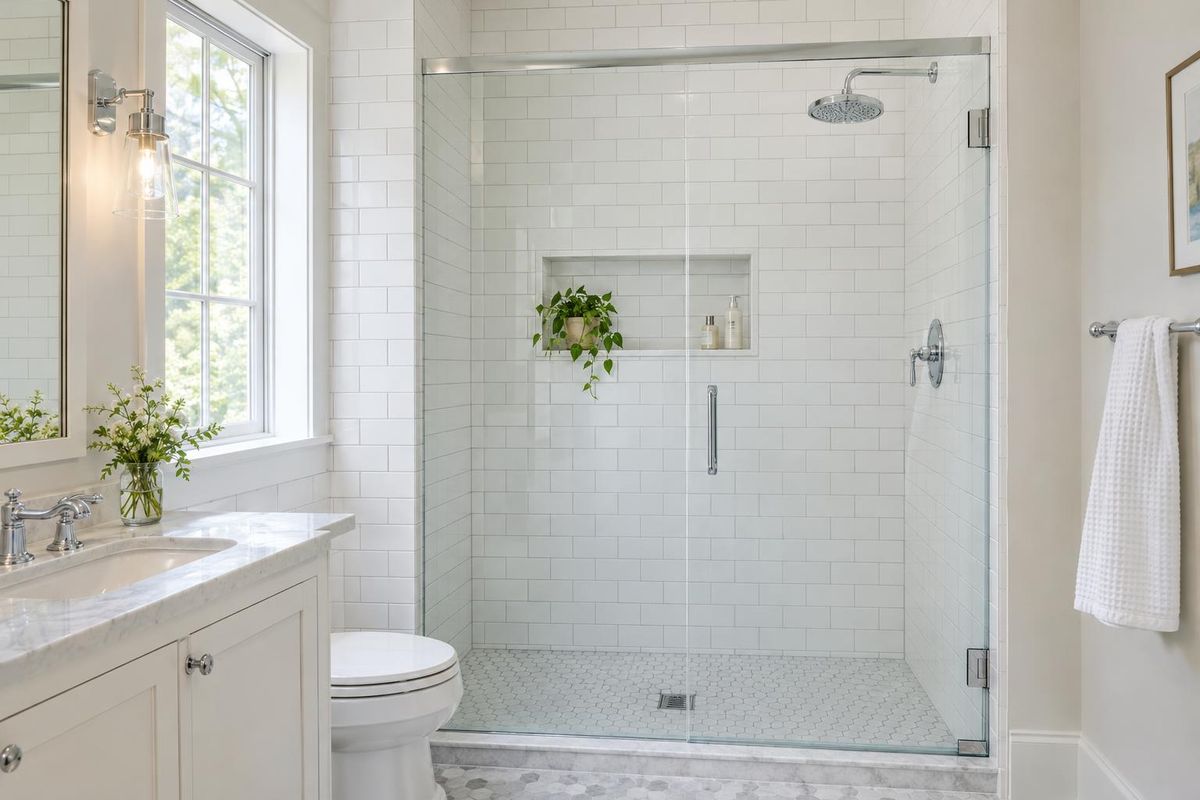
A semi-frameless door uses frameless-style glass with a slim header or rail. The frame adds rigidity and gives seals something to meet.
It is a good middle path for tubs and for walls that are not perfectly plumb.
Framed: sturdy and simple
A framed door wraps every glass panel in metal. It is strong, forgiving and often easier to adjust, which is why it is common in rentals and busy family baths.
Modern framed doors have slim frames and clean finishes, so they no longer have to look dated.
Choosing between them
Think about cleaning, budget of effort, wall condition and how often the door is used. A frameless door is easiest to wipe down, while a framed door is most forgiving.
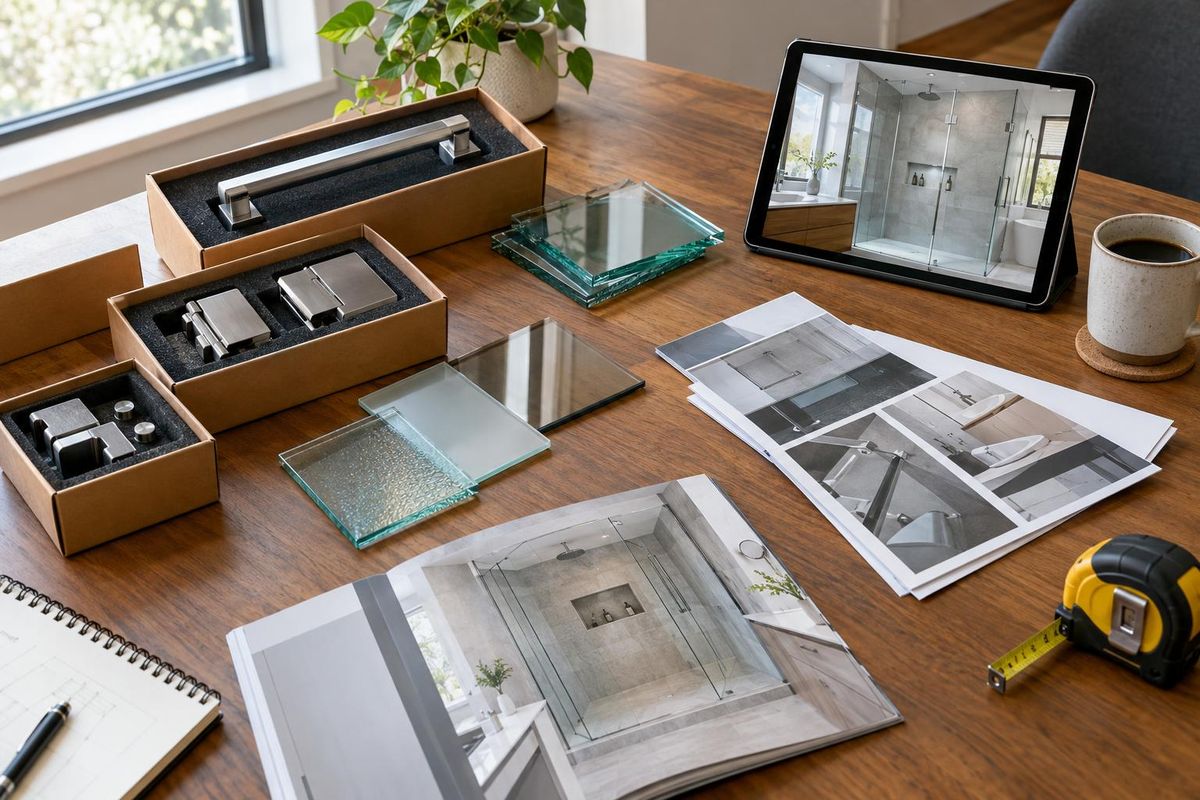
For homeowners in Nashville and across Middle Tennessee, we bring samples of all three so you can see and touch the difference.
Quick answers
Is frameless always better?
Not always. It is a matter of taste, walls and use. A well-fitted semi-frameless or framed door can be the right answer.
Can I switch from framed to frameless?
Often yes, if the walls and curb allow. We check before we recommend it.