Key takeaways
- Start with the opening: tub, shower or walk-in.
- Pick the door type by room: swing, slide or fixed panel.
- Choose glass and hardware that suit your tile and fixtures.
- Measure after the tile is finished, then order.
Step one: look at the opening
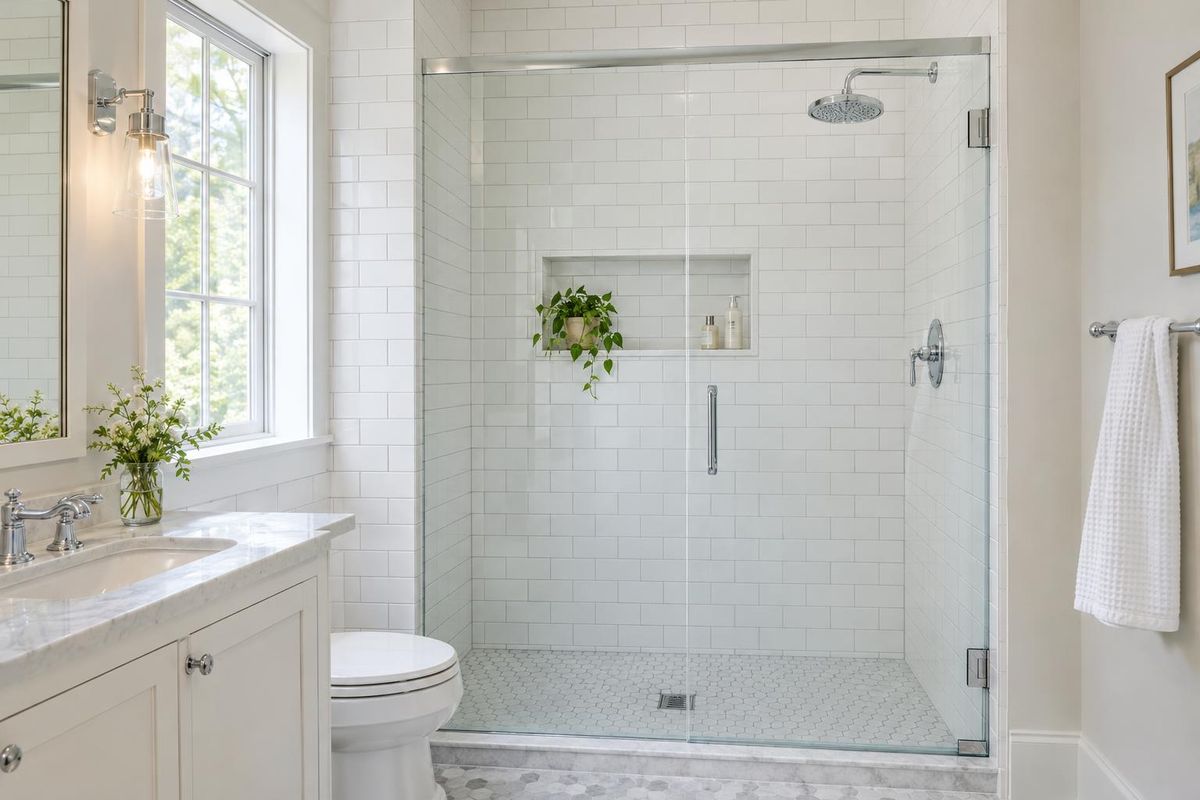
Note whether you have a tub-shower, a shower with a curb, a corner or a walk-in. The shape and width decide which door types are possible.
Check what is near the door: a vanity, a toilet, a room door. These decide whether the door can swing.
Step two: choose how the door opens
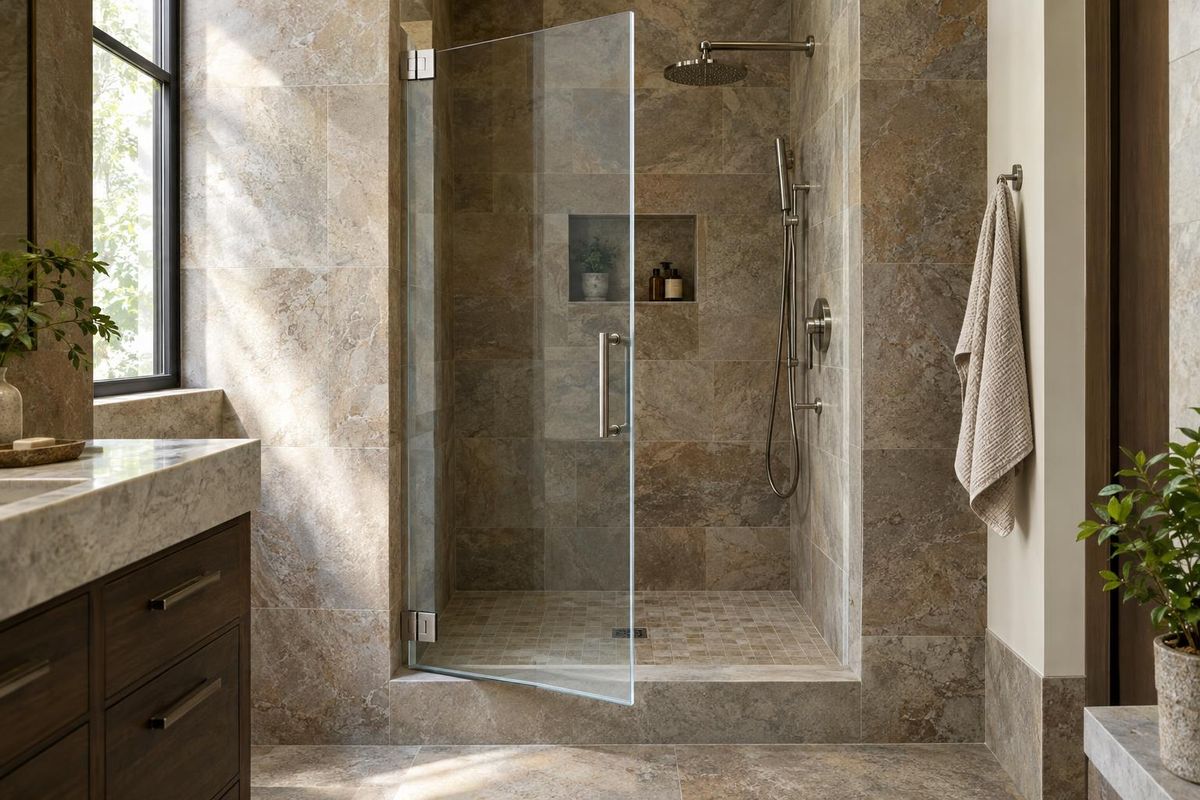
A hinged door gives a wide opening but needs swing room. A sliding or bypass door needs no swing but opens only part of the width. A pivot door gives a wide, elegant swing. A fixed panel needs no door at all.
Think about who uses the shower and how they step in.
Step three: glass and hardware
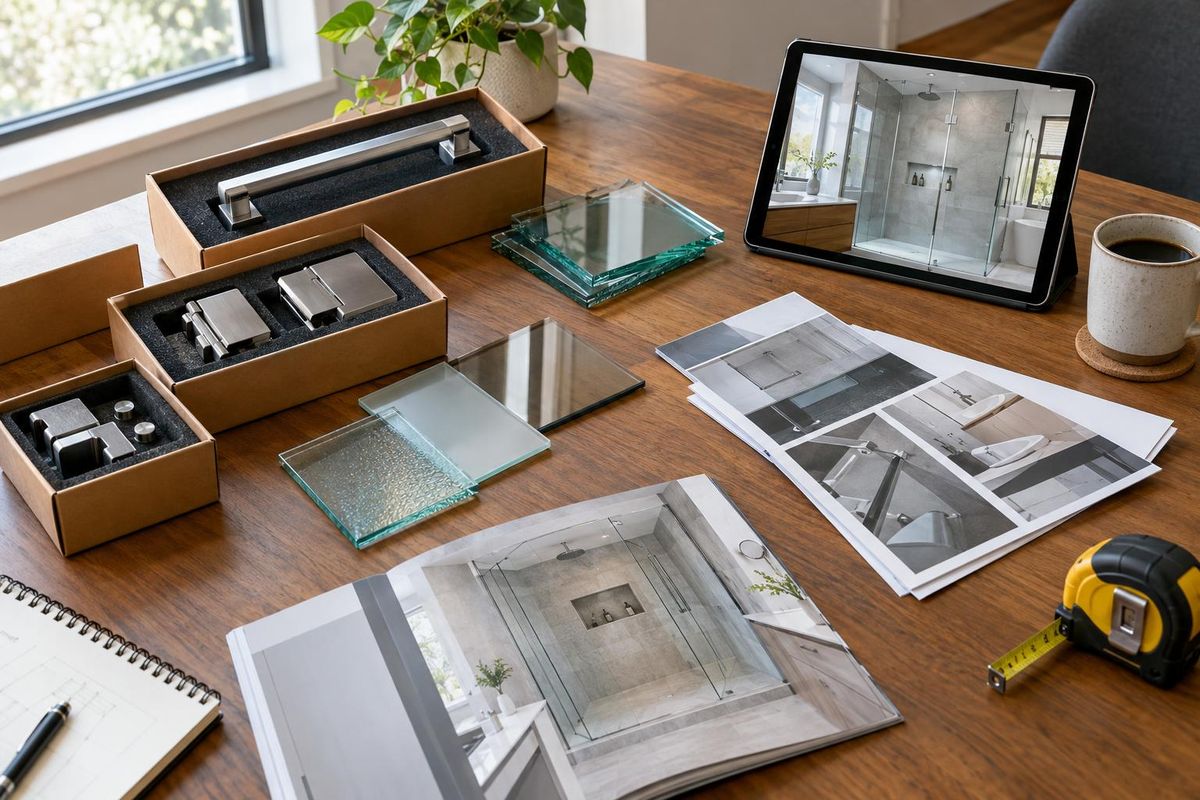
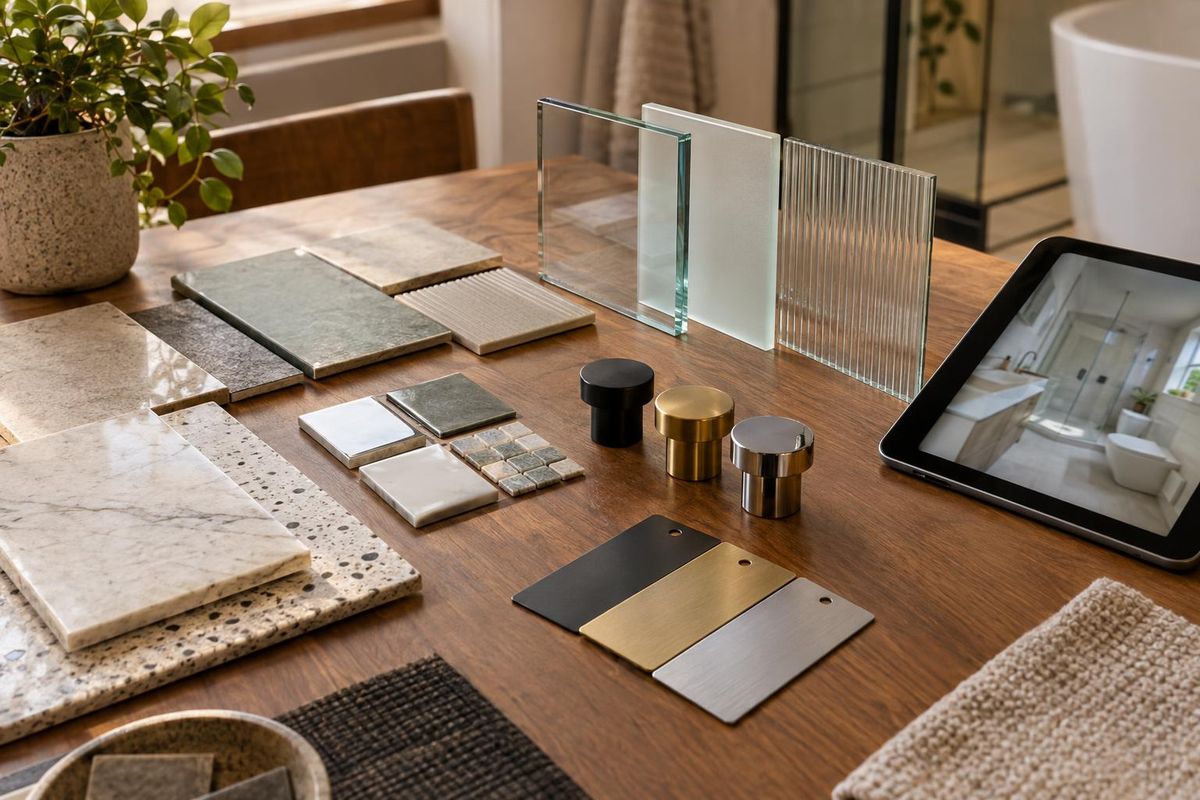
Decide between clear, low-iron, frosted, reeded or tinted glass, and between chrome, nickel, matte black and brass finishes.
Look at samples in your own light and next to your faucets before you decide.
Step four: measure and install
Glass is made to size, so measure the finished opening after tile and fixtures are in. A small error can mean a remake.
Choose an installer who templates the opening, explains the options and cleans up when the job is done. In Nashville and Middle Tennessee that is the way we work.
Quick answers
How long does a custom door take?
Custom glass is made after measuring, so the wait depends on the glass and finish. We share a timeline when we measure.
Can I choose online first?
Yes. The Shower Door Planner on this site lets you try options, and you can send your plan to us.